
ChillTap vs. Traditional Kegerators

Cold draft beverages sell themselves when the pour is right, and they lose money fast when it isn't. If you run a resort pool bar, a rooftop lounge, or a high-traffic event floor, the equipment behind the tap decides whether a guest walks away with a crisp, cold glass or a warm, foamy one they leave half-finished. This guide puts the ChillTap Pro next to a traditional kegerator so you can choose the system that fits how your venue actually runs, not how a spec sheet says it should.
By the end, you will have a clear side-by-side on cooling, labor, payment, and inventory, an honest look at the costs a kegerator quote tends to leave out, and a few real venue scenarios to help you match a system to your space.
What is a Traditional Kegerator?
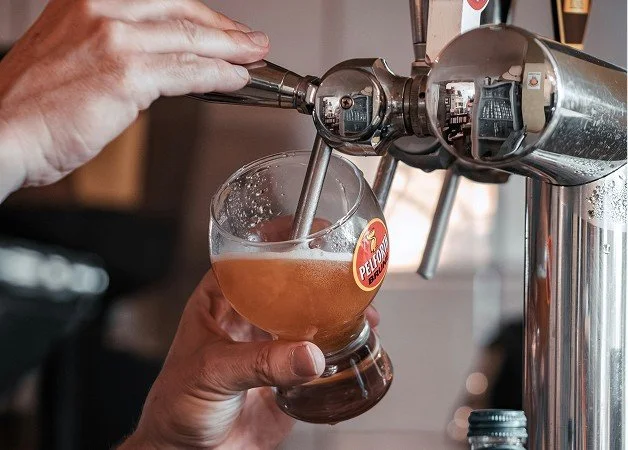
A traditional kegerator is a refrigerated cabinet that holds one or more kegs and dispenses draft through a tower or faucet using CO2 pressure. It keeps beer cold by chilling the entire box, and a staff member pours each glass by hand. Most commercial units stay in one spot, run on standard refrigeration, and serve a fixed set of taps.
That design has done its job in bars with a permanent back wall and a bartender on every shift. The trouble starts when service moves outdoors, the temperature climbs, or you want guests to pour for themselves. A cabinet built to cool a small enclosed space in an air-conditioned room behaves very differently at noon next to a pool deck.
What is the ChillTap Pro?
The ChillTap Pro is a self-contained draft system for hospitality venues that need to serve fast and move when the crowd moves. Rather than chilling a whole cabinet, it uses industrial-grade glycol cooling to keep beverage lines at a steady serving temperature, which keeps pours consistent in Florida sun or Arizona heat. Kegs sit inside the unit, gas regulation runs on CO2 or nitrogen blends tuned to each drink, and a touchscreen lets guests browse options and pour on their own with an RFID card, wristband, or room key. That makes it a portable keg system for operators who have outgrown a fixed cabinet. You can see the full build on the ChillTap Pro self-contained draft system page.
It also pours more than beer. The same unit handles sparkling wine, still wine, cold-brew coffee, nitro cocktails, and kombucha, so one cold-draft station can cover the whole drink menu.
ChillTap Pro vs. Traditional Kegerator, Side by Side
Here is how the two compare on the factors that shape day-to-day service.
| Factor | Traditional kegerator | ChillTap Pro |
|---|---|---|
| Cooling method | Chills the whole cabinet | Glycol-cooled lines hold serving temp |
| Performance in heat | May struggle in high ambient temps | Built for hot outdoor climates |
| Mobility | Can be moved but heavy duty casters are required | Rolls to where the crowd is |
| Who pours | Staff, one glass at a time | Guests self-pour via touchscreen |
| Payment | Handled separately at a register | RFID card, wristband, or room key at the tap |
| Inventory | Manual counts and estimates | Real-time tracking per pour |
| Beverages | Mostly beer and cider | Beer, wine, cold brew, nitro cocktails, kombucha |
| Setup | May require additional plumbing and install work | Plug-in ready, minimal setup |
The table shows the pattern quickly. A kegerator is a fixed appliance that a person operates. A ChillTap-style system is a mobile self-pour beverage dispensing system that a guest operates, with the cooling and payment built in.

Where a Traditional Kegerator Still Earns Its Place
None of this means a kegerator is the wrong call everywhere. In a climate-controlled indoor bar where the taps sit behind a fixed counter, the staffing is steady, and the room never gets hot, a commercial kegerator is a proven, lower-cost way to serve draft without changing how you operate.
Small taprooms and neighborhood spots fit that profile well. Volume is predictable, the layout is stable, and a hand pour is part of the experience guests came for. A kegerator rewards that kind of consistency.
Where a ChillTap-Style System Pulls Ahead
The gap opens the moment your service leaves that tidy indoor box, and that is where a kegerator alternative starts to earn its keep. When ambient temperature rises, a cabinet-chilled system fights to keep the pour cold, and warm beer means foam and complaints. Glycol cooling holds the line temperature steady regardless of what the afternoon is doing outside, so the last pour of a hot day looks like the first.
Mobility matters just as much. A resort might want draft at the pool by day and the rooftop by night, and a portable self-contained draft system that rolls into place makes that possible without plumbing a second bar. Self-pour adds the final edge: guests serve themselves the second they want a drink, which pulls pressure off your staff during a rush and shortens the wait that usually sends people back to their seats empty-handed.
The Costs a Kegerator Quote Tends to Hide
This is where operators get surprised. The sticker price of a traditional kegerator is only part of what you spend to keep cold draft beverages flowing.
Over-pour and foam are the quiet drain. Every hand pour carries some spillage, and across a busy season those ounces add up to real kegs of lost product. Industry benchmarks put a well-run system at a keg yield near 95% or better, while setups with too many lines for their volume slip toward 90%, close to one keg in ten poured down the drain. Precise pressure control and self-pour metering cut that loss, and per-pour logging catches the shrinkage that manual counts miss. GS Draft reports product loss below 2% with RFID tracking on the ChillTap Pro.
Labor is the next line. A kegerator ties up a staff member for every drink served, and at peak that person becomes the bottleneck. Self-pour hands that job to guests and frees your team for table service and upsells.
Downtime rounds it out. A system that is hard to clean or service means hours with no revenue coming off the tap, so a quote that only lists the box in front of you leaves real running costs off the page.
Match the System to Your Venue
The right choice comes down to your space. A resort pool bar, with all-day heat and guests who would rather not walk to a register in a wet swimsuit, fits glycol cooling and RFID wristband pours almost exactly. A rooftop lounge that spikes at golden hour gets a mobile self-pour station to absorb the surge without over-staffing. An event or festival needs a draft system that deploys in minutes and reconciles every pour, which a fixed cabinet cannot do. The clear exception is the steady indoor taproom, where a traditional kegerator is still the economical pick.
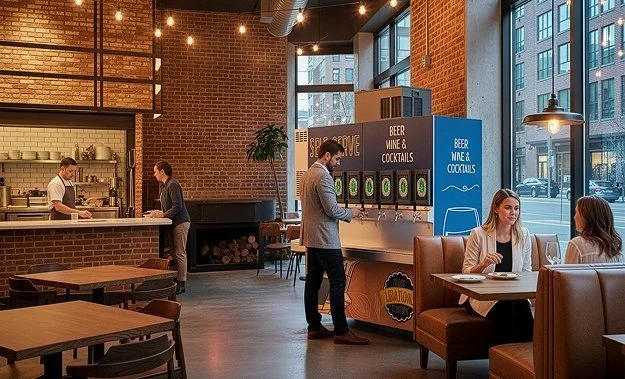
Serving cold draft beverages without permanent installation means you stop letting the building decide your beverage program. A rooftop, a pool deck, a ballroom, a festival field: each becomes a place you can pour real draft at the quality guests expect, then reclaim the moment service ends. That flexibility is often what separates offering draft from skipping it, especially for seasonal and event-driven operations, and it comes down to equipment that holds drinks genuinely cold under pressure without the construction. GS Draft builds portable, self-contained systems around exactly that, so the last step is choosing the setup that fits how you operate.
What to Check Before You Buy
Run through this quick list before you commit to either system.
Ambient temperature: Will the taps sit in heat or stay in a climate-controlled room?
Mobility: Does service need to move between areas, or is the location fixed?
Staffing: Can you cover hand pours at peak, or do you need guests to self-serve?
Payment flow: Would RFID or cashless pours smooth your guest experience?
Menu range: Are you pouring only beer, or wine, cold brew, and cocktails too?
Inventory needs: How much do over-pour and shrinkage cost you today?
Your answers usually point clearly to one system. Heat, movement, and self-service pointing the same direction is the strongest signal that a self-contained draft system will pay off.
How GS Draft Supports the Switch
Choosing hardware is the easy part. Making it work in your space is where a partner matters. GS Draft has worked in beverage dispensing since 2011 and handles the full path, from system design and installation to staff training and ongoing maintenance, so a new station does not become a new headache.
The ChillTap Pro is also built to match your brand, with finishes and a touchscreen menu you can shape to your property. For operators considering a broader setup, GS Draft offers related self-service options such as Hospitality Kiosks, CargoTaps, and Frictionless Tap Walls, which means the comparison does not have to end at a single unit.
A traditional kegerator is a solid, affordable choice for a fixed indoor bar with staff on hand, but the moment heat, mobility, or self-service enters the picture- at pools, rooftops, resorts, and events- a self-contained system usually wins on both guest experience and the product you stop wasting. The real question is which one matches how your venue actually serves cold draft beverages, and GS Draft can walk your space and help you make that call.
Ready to See It in Your Space?
GS Draft can walk your property, map your service flow, and show you exactly how a ChillTap Pro would perform in your conditions. Request an appointment with the GS Draft team and book your appointment today to get a system matched to your venue.
Frequently Asked Questions
What is the difference between a kegerator and a draft system like the ChillTap Pro?
A kegerator chills an entire cabinet and relies on staff to pour each glass, and it stays in one place. The ChillTap Pro is a self-contained mobile draft system that cools the beverage lines with glycol, lets guests self-pour through a touchscreen, and tracks inventory in real time. The first is a fixed appliance; the second is a movable service station.
Is a self-pour system a good kegerator alternative for outdoor venues?
For most outdoor settings, yes. Glycol line cooling holds serving temperature in high heat where a cabinet-cooled kegerator tends to struggle, and a plug-in design lets you move draft service between areas like a pool deck and a rooftop without plumbing work.
What is the best kegerator alternative for a resort or hotel?
For resorts and hotels, the strongest fit is usually a system with RFID self-pour. Guests dispense a drink with their room key or wristband and skip the register line, so a lobby bar or amenity area runs cashless without adding staff, and charges post straight to the room. The ChillTap Pro was built for exactly that kind of all-inclusive service.
How long does a keg last in a commercial draft system?
Keg life depends on the beverage, the gas setup, and how steadily temperature is held. As a general guide, a keg pushed with CO2 at the right temperature and pressure stays fresh for roughly 45 to 60 days when the beer is unpasteurized and 90 to 120 days when it is pasteurized. Switch to a picnic or party pump, which forces in oxygen, and that window drops to about 12 to 24 hours. Consistent cooling and proper pressure protect the full window, while temperature swings and over-pouring shorten it and waste product.
Do self-pour systems really reduce waste?
They can reduce it meaningfully. Precise pressure control cuts foam and over-pour, and per-pour tracking exposes shrinkage that manual counts miss. For context, a solid traditional setup aims for about 5% waste or less, and looser operations lose closer to 10%, so the gap is real money. GS Draft reports product loss below 2% with RFID tracking on the ChillTap Pro.
Can one system pour more than beer?
Yes. The ChillTap Pro handles beer and cider along with sparkling wine, still wine, cold brew coffee, nitro cocktails, and kombucha, with gas regulation adjusted per drink type. That lets a single cold-draft station cover a much wider menu than a beer-only kegerator.
How much does a commercial draft system cost?
Pricing depends on the number of taps, the beverages you serve, and the level of installation and branding you want. A self-contained system like the ChillTap Pro is quoted on your specific setup rather than a flat list price, so the most accurate number comes from a walkthrough of your venue.