
Why Portable Draft Beverage Systems Are Replacing Traditional Kegerators at Events

Picture a rooftop reception at 4 p.m. in July. The bar line is twelve people deep, the kegerator wheeled in that morning is struggling against the heat, and the third pour in a row comes out as half foam. The bartender keeps dumping short glasses into a drip bucket while guests wait. That single point of failure is why more event teams are moving away from traditional kegerators.
What follows is how a portable draft beer system fixes that, how the two compare in the field, and how to match a setup to a wedding, festival, resort, or corporate function, with straight answers to the questions planners ask most before booking.
What a Portable Draft Beverage System Actually Is
A portable draft beverage system is a self-contained unit that chills, pressurizes, and pours draft drinks with no permanent installation. It holds the kegs, cooling, and gas regulation inside one movable cabinet, so a venue can serve beer, wine, cocktails, cold brew, or kombucha at almost any location within minutes of plugging it in.
That last part is the shift. A kegerator was designed to sit in one spot behind a bar. A portable draft beer system was designed to travel, hold its temperature in the field, and pour clean from the first glass to the last keg. The category goes by a few names, including mobile draft system and portable beer dispenser, but the working idea is the same.
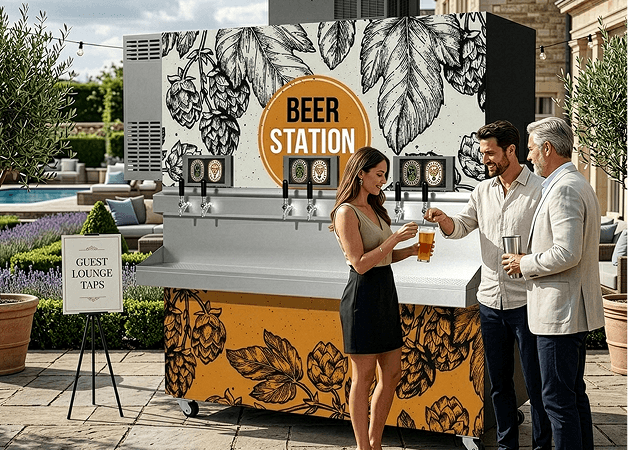
Where Traditional Kegerators Fall Short at Events
A kegerator is a refrigerator with a tap through the door. For a home bar or a slow taproom corner, that works fine. Push it into a live event, and the cracks show fast.
The first problem is heat. Most kegerators lean on the compressor and the insulated box to hold temperature, which is fine indoors at 70 degrees. Set that same unit on hot pavement or under afternoon sun and the beer warms in the lines faster than the box can recover. Warm beer means foam, and foam means waste and slow pours.
The second problem is throughput. A standard kegerator runs one or two taps off a single cooling zone. When 200 guests hit the bar in the first hour, that rarely keeps the line moving, and the compressor cannot recover between back-to-back pours.
The third problem is logistics. Kegerators are heavy, awkward to move, and built for a fixed location and power draw. Getting one up a service elevator to a rooftop, or out to a field with no dedicated circuit, becomes its own project, and for a caterer running three events in a weekend, that handling time adds up. None of this makes them bad equipment, just the wrong tool for a job built around heat, crowds, and constant movement.
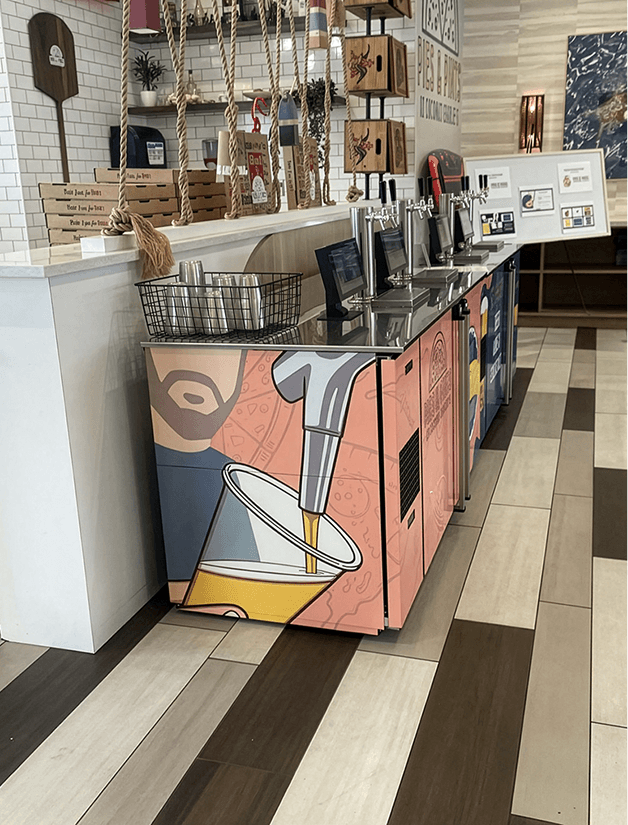
Portable Draft Systems vs. Kegerators: The Real Differences
The honest way to compare them is by the conditions an event creates, like temperature swings, peak-hour rushes, and repeated setup and teardown.
Run them side by side, and the differences line up along those pressures. A kegerator's cooling starts to slip as the temperature outside climbs, while a portable system is built to hold serving temperature outdoors. A kegerator usually gives you one or two faucets off a single cooling zone, where a portable unit carries multiple taps sized for a crowd. Moving a kegerator means wrestling a heavy box in and out of a fixed spot, while a portable system rolls in, plugs in, and pours within minutes. And a kegerator mostly pours beer, where a portable cabinet handles beer, wine, cocktails, cold brew, and kombucha, with the choice to run bartender service or guest self-pour from the same equipment.
If an event planner is searching for the best portable draft beverage system for events, the deciding factor is rarely the tap count on a spec sheet. It is whether the unit keeps beer cold and pours clean during the busiest 45 minutes of the night, because that window is where guest experience and product waste are won or lost.
There is a cost angle too. Every foamy pour a bartender dumps is beer you paid for going down the drain. Tighter temperature and pressure control shrink that loss, so the math often favors a portable system before you even count the labor saved on setup.
What Actually Keeps the Beer Good: Cooling, Gas, and Pressure
This is the part most competitor pages skip, and it is the part that separates a system that performs from one that disappoints by the second keg.
Cooling is the foundation. Better portable systems use glycol chilling rather than a cold box alone. A glycol setup circulates chilled fluid through short, insulated lines right up to the tap, so the beer stays at serving temperature all the way to the glass instead of warming in the last few feet. The ChillTap Pro from GS Draft is built to hold cold beverages this way even in Florida sun or Arizona heat, and those short, cooled lines are what decide whether pour number 300 looks like pour number one.
Gas regulation is the second half. Different drinks want different pressures. Carbonated beer, nitro cold brew, and still wine each pour best under their own gas blend, so a system that runs a careful mix of CO2 and nitrogen gives you clean pours across every tap, while a one-size regulator produces foam on some lines and flat drinks on others.
A field tip worth keeping: when a portable system foams up at an event, the cause is almost always temperature or pressure, not the keg. Confirm the beer has reached serving temperature before service and that the gas is set for the specific beverage; most foam problems solve themselves. A good vendor dials this in before guests arrive rather than troubleshooting mid-rush.
Self-Pour and Cashless Service: The Shift Competitors Miss
The newest change in event draft dispensing has less to do with the keg and more to do with who pulls the handle. Self-pour technology lets guests serve themselves and pay as they go, which takes pressure off the bar during peak hours.
On a system like the ChillTap Pro, a guest taps an RFID card, wristband, or room key linked to a payment method, then pours from a touchscreen that shows options and pricing. For a resort or festival, that turns a bottleneck into a cashless flow and frees staff to serve rather than ring up every pint.
The operational payoff is accountability. Because every pour is tracked, you get accurate inventory and tight control over waste. GS Draft puts product loss from overflow below 2 percent on RFID-tracked pours. For a venue that has watched kegs empty faster than sales explain, that visibility often pays for the system on its own.
Self-pour is not right for every event, and a served bar still makes sense for formal functions. A modern portable draft beverage system gives you both models in one unit, which a kegerator never will.
Matching the System to Your Event
The right configuration depends on the crowd, the venue, and the drink menu. A few scenarios show how the choice plays out.
For a wedding, the priority is a clean look and a menu that fits the couple. A mobile draft beer system for weddings can pour a signature cocktail, a local beer, and a prosecco from one cabinet, which covers most guest preferences without three stations crowding the reception space.
For a festival or large public event, throughput rules everything. You want multiple taps, self-pour to move volume, and a portable kegerator on wheels that can be repositioned as foot traffic shifts. A draft beer trailer alternative that rolls straight onto the site also avoids the parking and towing headaches a trailer brings.
For a poolside or rooftop venue at a resort, heat and space are the constraints. A compact unit with strong glycol cooling holds temperature in direct sun, and cashless self-pour keeps a small staff from being overwhelmed on a busy afternoon.
For a corporate function or private party, a portable beer dispenser for parties needs to arrive, set up quietly, and pour a short curated list well. Fast deployment and a tidy footprint matter more than a big tap count.
What to Look for When Choosing a Provider
Equipment is only half the decision. The vendor behind it decides whether your event runs smoothly or turns into a service call.
Ask how the system holds temperature in real outdoor conditions, not lab settings. Ask whether they handle design, delivery, setup, staff training, and maintenance, or whether you are on your own once it arrives. Ask what beverages the unit supports and how fast it deploys, since one cabinet that pours beer, wine, cocktails, cold brew, and kombucha gives you far more menu flexibility than a single-purpose kegerator.
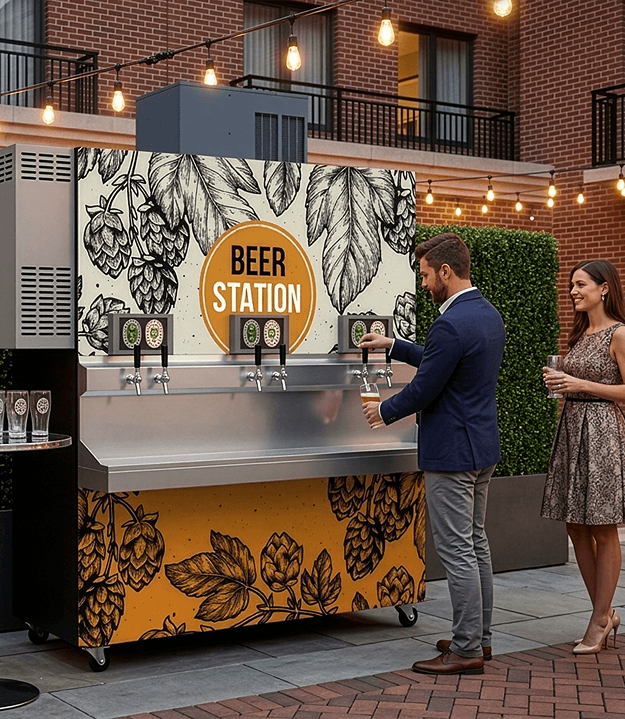
This is where a specialist pays off. GS Draft has spent over a decade in efficient beverage dispensing and supports customers from the first design conversation through ongoing maintenance. Our ChillTap Pro self-contained draft system is built around the event conditions above, with glycol cooling, precise gas regulation, and RFID self-pour in one plug-in-ready unit. For other formats, the company also builds Hospitality Kiosks, CargoTaps, and Frictionless Tap Walls.
Kegerators still earn their keep where they were built to live, but events bring heat, crowds, and constant movement that expose every weakness a fixed cold box has. A portable draft beverage system answers those conditions directly, with cooling built for the field, pressure tuned per drink, and a self-pour option that keeps lines short and inventory honest, which is exactly what GS Draft designs its systems to do. If you are weighing draft options for an event or a venue upgrade, the next step is a short conversation with GS Draft about your crowd size, drink menu, and setting.
Ready to Serve Better Draft at Your Next Event?
Request a quote from GS Draft and get a system matched to your event, your beverages, and your venue, backed by a team that handles everything from design to on-site support.
Frequently Asked Questions
How does a portable draft beverage system work?
It keeps kegs, cooling, and gas regulation inside one movable cabinet. Once you plug it in, glycol chilling holds the beer at serving temperature through insulated lines while CO2 or nitrogen pushes each drink to the tap at the right pressure. Guests or bartenders pour from the faucets or a touchscreen.
Is a kegerator worth it for events?
For a home bar or a fixed indoor spot, yes. For events with heat, big crowds, and frequent moves, a kegerator tends to fall short on cooling and throughput, which is why many planners choose a portable draft system built for those conditions instead.
How long does a keg last once it is tapped?
Because a portable system dispenses with CO2 or nitrogen instead of a manual air pump, a tapped keg stays fresh far longer than most people expect. Unpasteurized craft beer holds up for about 45 to 60 days and pasteurized beer for roughly 90 to 120 days, as long as it stays cold and correctly pressurized. A manual air pump introduces oxygen, which drops that window to about 12 to 24 hours.
What keeps the beer cold at an outdoor event?
Glycol cooling does the heavy lifting. Chilled glycol circulates through short, insulated lines right up to the tap, so the beer holds its temperature in direct sun instead of warming in the last stretch of line the way it does in a basic cold box.
Do you need CO2 or nitrogen to pour draft at an event?
Yes, and the choice depends on the drink. Most beers pour on CO2, while nitro cold brew and certain stouts use nitrogen for a creamier pour. A good portable system regulates the right gas and pressure for each beverage, and can pour beer, wine, cocktails, cold brew, and kombucha from the same cabinet.
How much setup does a portable draft system need?
Far less than a traditional install. GS Draft states that full setup of the ChillTap Pro can take as little as a few minutes once it is plugged in. Your provider should also handle delivery, setup, and a temperature and pressure check before service.